The Verbivka Shirt: Introduction & Materials
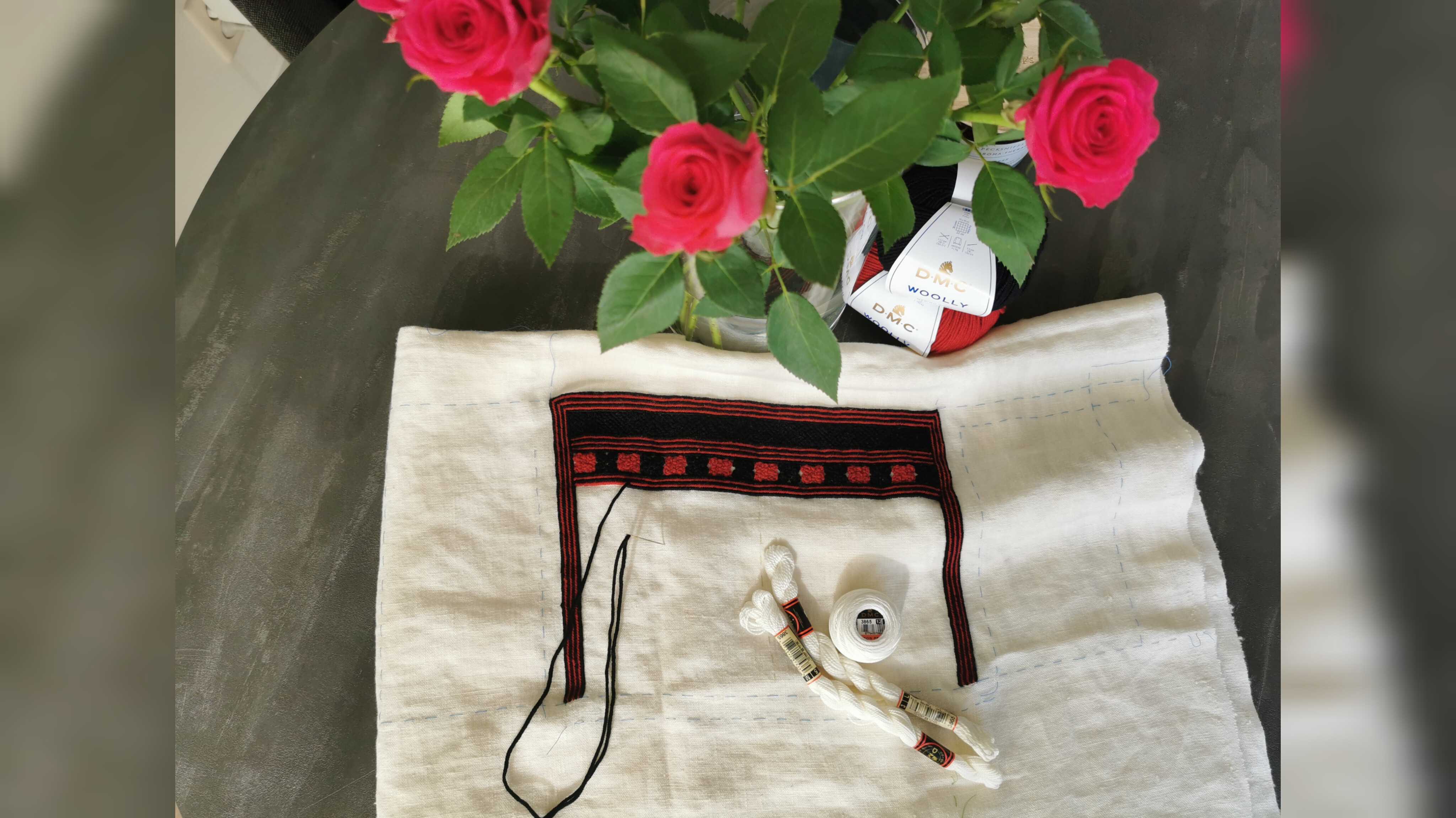
"Verbivka" Shirt
Welcome to everyone who has found this page! With this post, I’d like to begin a journal documenting the reproduction of a women’s Borshchiv embroidered shirt from the village of Verbivka, dating back to the 1930s.
Let me start a bit broadly, with something that’s deeply important to me. In recreating Ukrainian shirts (sorochky) as closely as possible to their original appearance—while using modern materials—I see a kind of rebirth: a second breath, a new life, and the revival of our traditions and Ukrainian culture.
I am sincerely grateful to all those who went on expeditions across Ukraine and collected what often remained only as fragments of old shirts—buried in chests underground or hidden in tree hollows, concealed from the watchful eyes of the Tsarist empire and, later, Soviet authorities. Any visible expression of Ukrainian identity was often suppressed. People hid their traditional garments to avoid arrests, searches, or the destruction of sacred items. Ukrainian intelligentsia who preserved authentic folk attire often did so in secret [1].
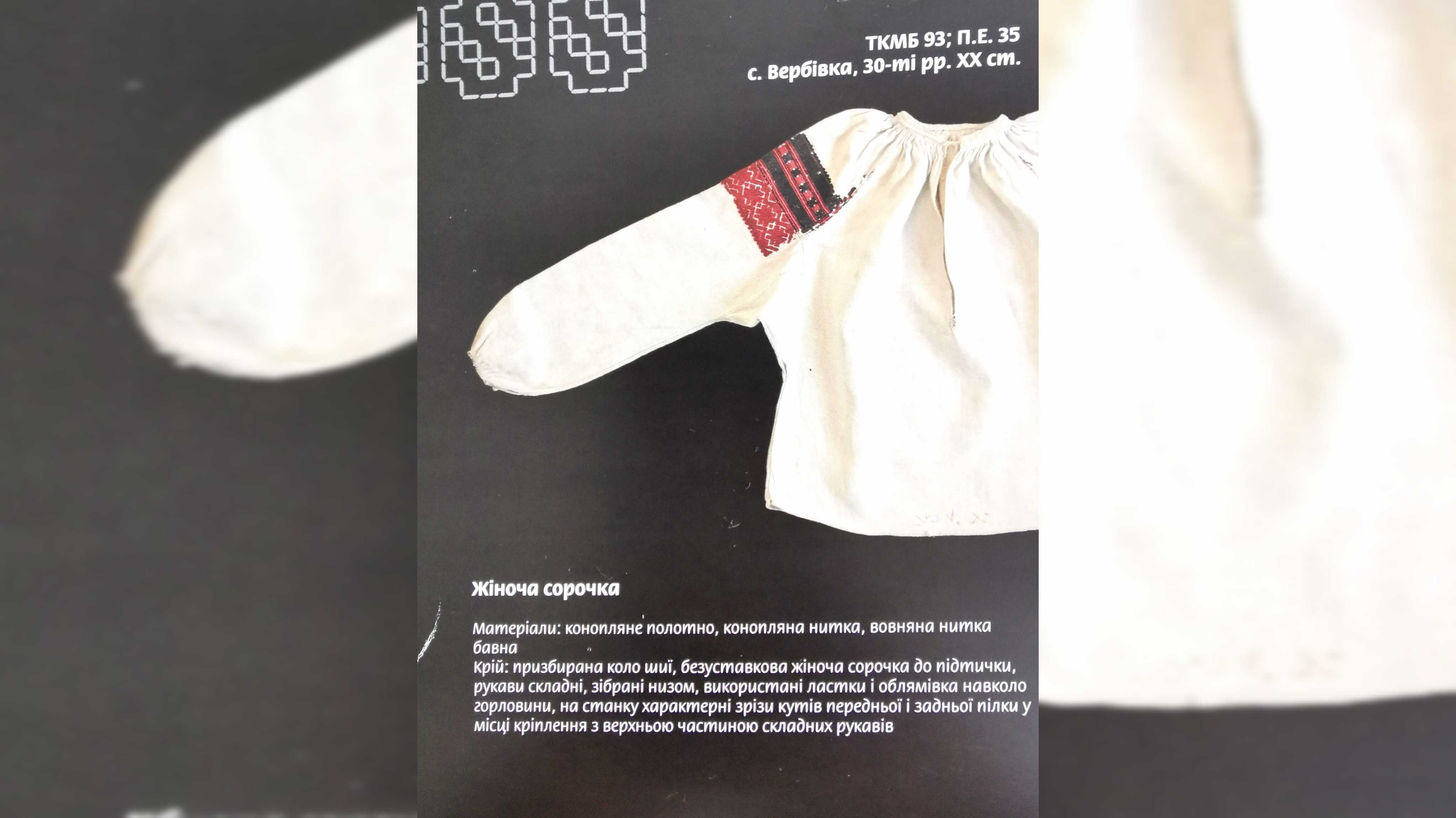
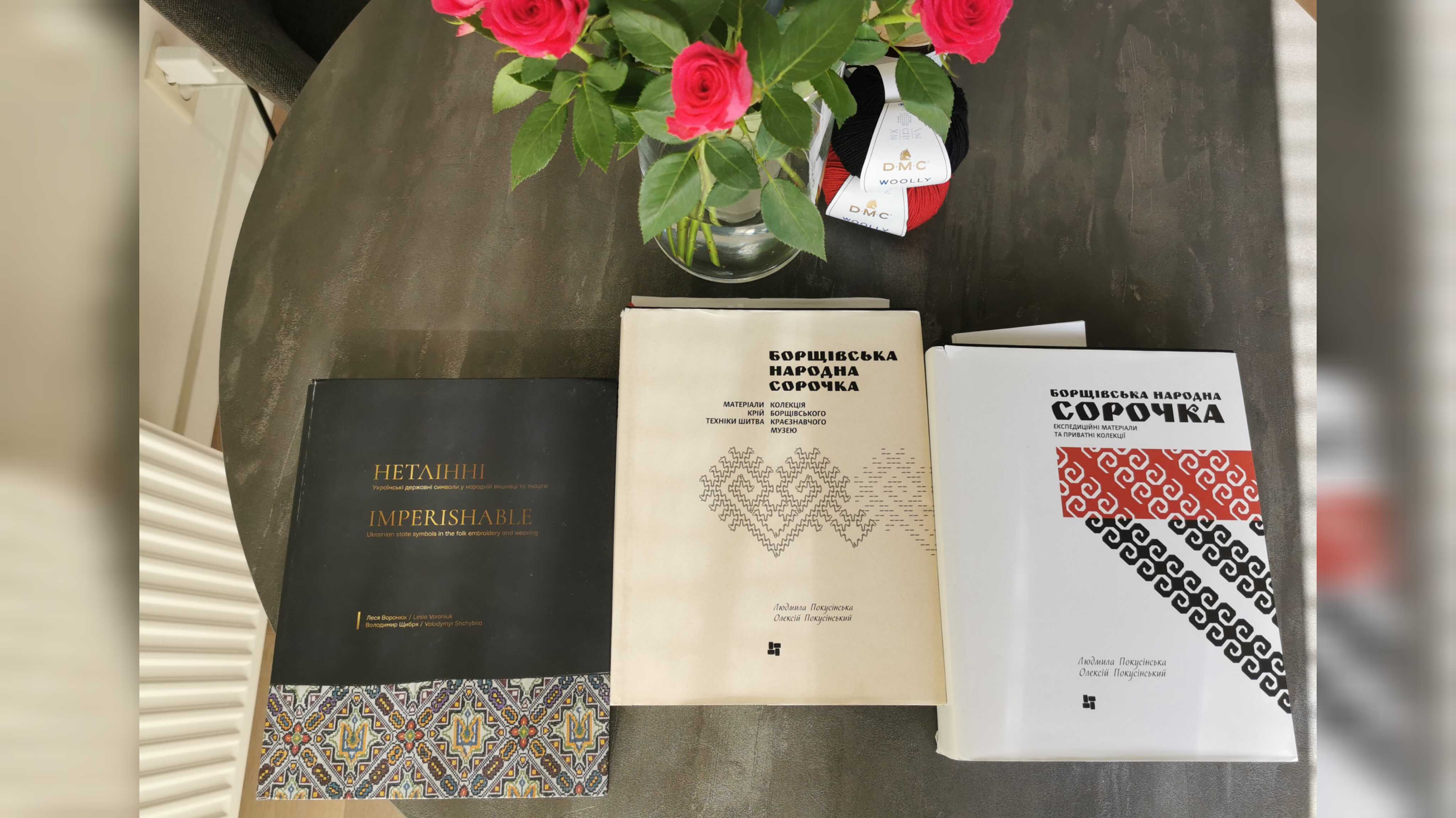
I chose to recreate a shirt from the village of Verbivka, described in the book by Liudmyla and Oleksii Pokusinskyi [2]. In this post, I’ll focus on the materials I selected—the fabric and threads.
Materials
In the original shirt, the following materials were used:
- Hemp cloth
- Hemp thread
- Wool yarn
The cut is without a shoulder insert (bezustavkovyi), with gathering around the neckline. The sleeves are complex, gathered at the cuffs. The shirt includes a gusset (lastka) and a neckline facing (oblyamivka). On the bodice (stanok), the characteristic diagonal cuts can be seen at the junction of the front and back panels with the upper sleeves.
I took a slightly more complicated route and chose uneven-weave fabric. This isn’t my first shirt, so I allowed myself to take that risk. Hopefully, it will turn out well!
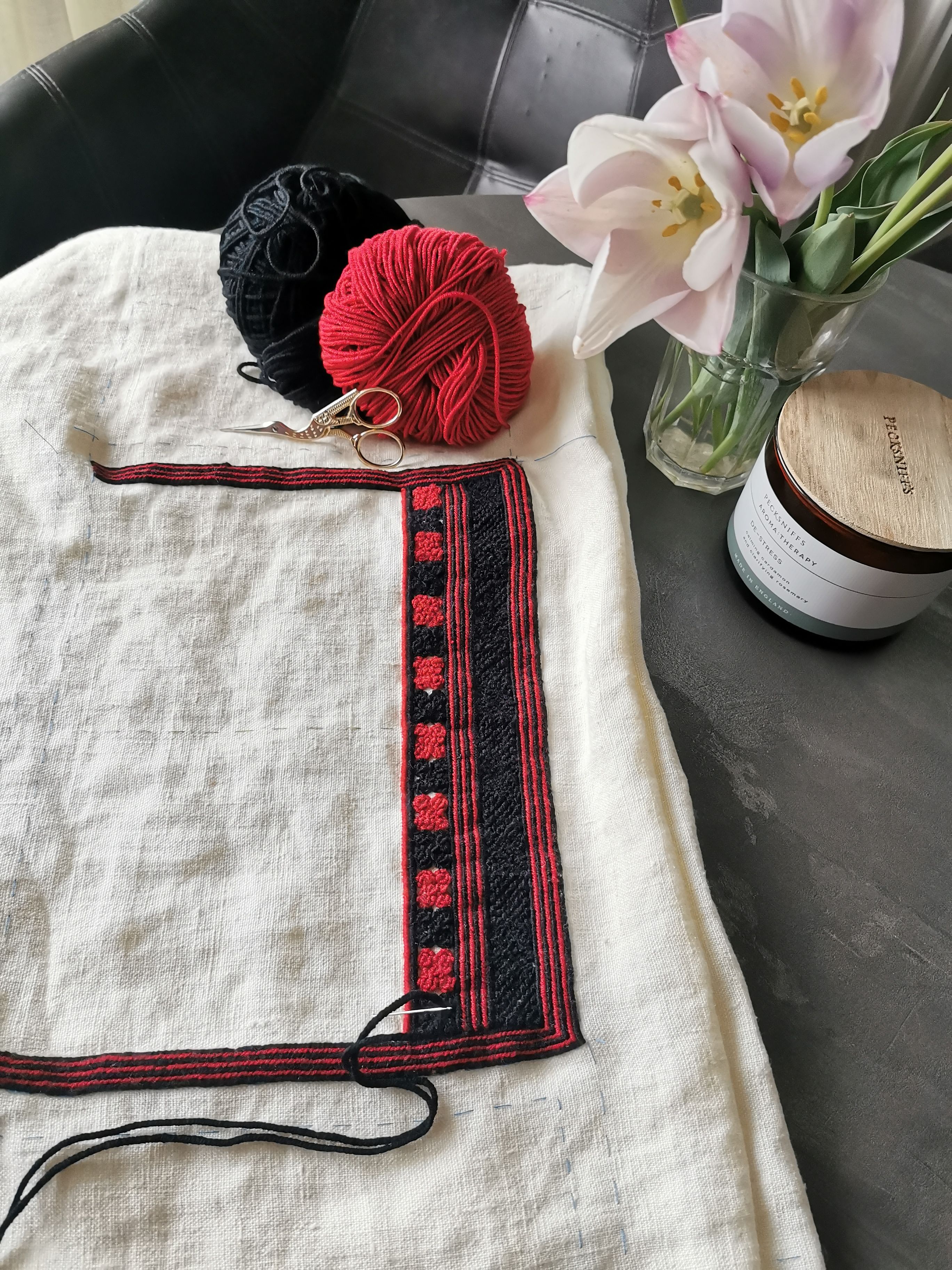
I selected the fabric “French Hemp K-10”. It’s quite dense—290 g/m²—so it's close to authentic handwoven hemp fabric. Because the weave is uneven, I had to adjust the stitch count module—I will be embroidering with a 2×3 thread count (instead of the standard 2×2).
If you’d prefer an easier experience, you could go with “Cossack Hemp” or a similar German evenweave fabric. These are more uniform, which makes the embroidery and thread counting significantly easier.
Threads
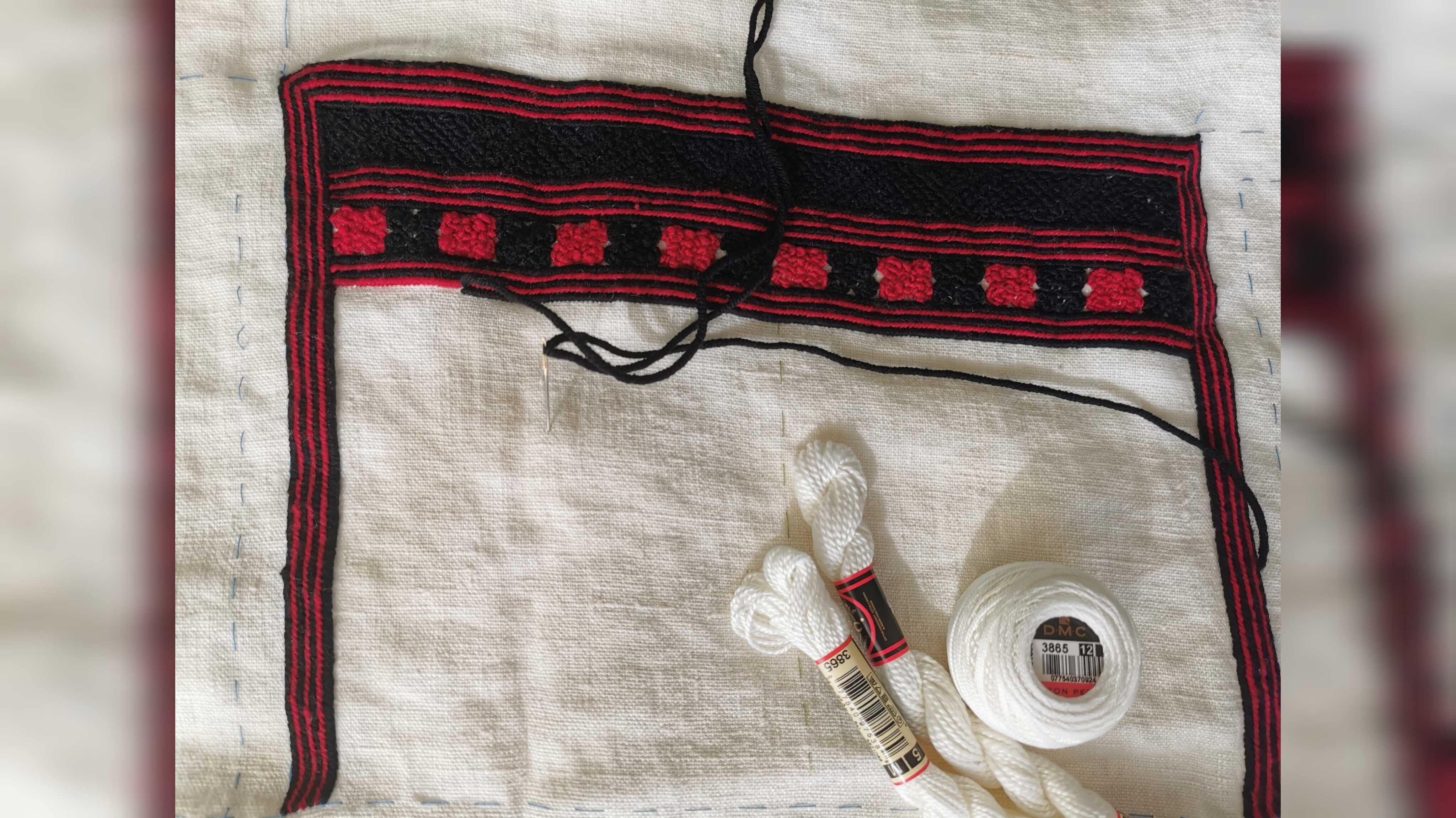
For the main embroidery, I am using:
- DMC Woolly Merino Wool (50 g / 125 m) — Red: No. 052 — Black: No. 02
For the construction and sewing of the shirt, I am using:
- DMC 3865, sizes No. 12, No. 5, and No. 3
Final Notes
It’s essential to always choose threads and fabric together, depending on the specific shirt. Their interaction matters—a thread may lie beautifully on one fabric and poorly on another. In that case, it’s better to adjust accordingly.
I often turn to the shop “Svit L’onu” (“The World of Linen”) or others—describing my project and asking for help in selecting the right materials. There are always several options—in terms of price and ease of use.
References
- Voroniuk, L., & Shchybria, V. (2023). Netlinni: Ukrainian State Symbols in Folk Embroidery and Weaving. Chernivtsi: R.K. Maister-Print. 362 p.
- Pokusinska, L., & Pokusinskyi, O. (2012). The Borshchiv Folk Shirt: Materials, Cut, Embroidery Techniques. Collection of the Borshchiv Local History Museum. Kyiv: Novyi Druk. 368 p.